Pilot year/Free, grades 9–12
The Inquiry Atlas
InvestigationsFor teachersAboutSupportDonate
Donate
InvestigationsFor teachersAboutSupport

Visual Field Investigations

Each investigation starts with an original photograph from the field, and ends with a claim a student has to defend.
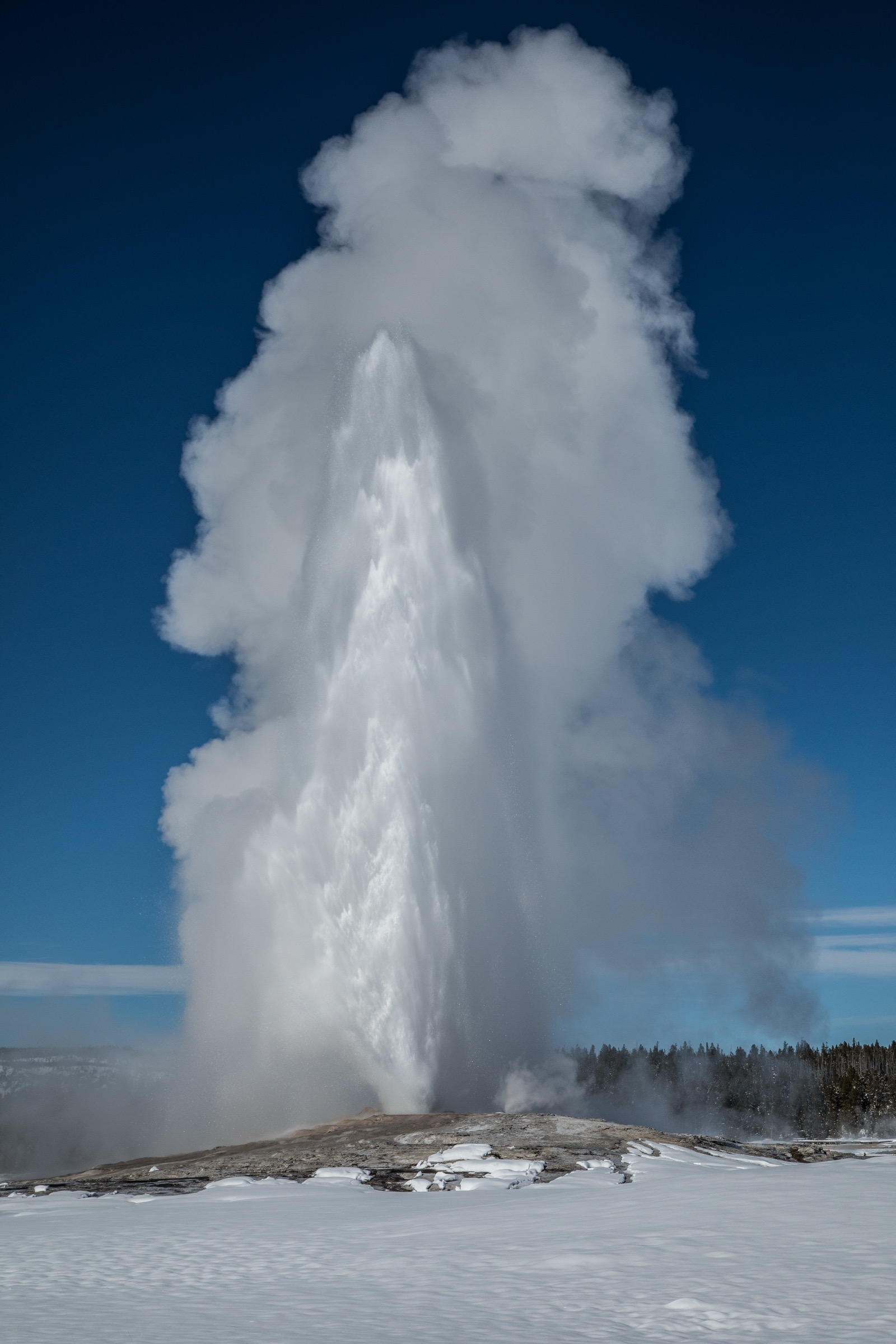
A tall white column of water and steam erupts from a low pale mound and rises through most of the frame against a deep blue sky, its top spreading into a broad billowing cloud that drifts to the right. Inside the column a narrower, denser jet of water is visible, textured and streaked. The mound at its base is bare gray and tan, streaked with runoff, carrying small patches of snow, with thin steam rising from vents to its right. Flat unbroken snow covers the foreground and the middle distance. A dark band of snow-dusted conifers runs along the right horizon, and a pale hazy ridge lies low on the left.
Geothermal systems

Where the Earth Leaks Heat

A stripe of orange running across white ground is a temperature map drawn by living things — and the place it was photographed sits on one of the largest geothermal resources on Earth, permanently off-limits to anyone who wants to generate electricity from it.
Grades 9–12Earth Science · Environmental Science · Physical Science45 min3 standards
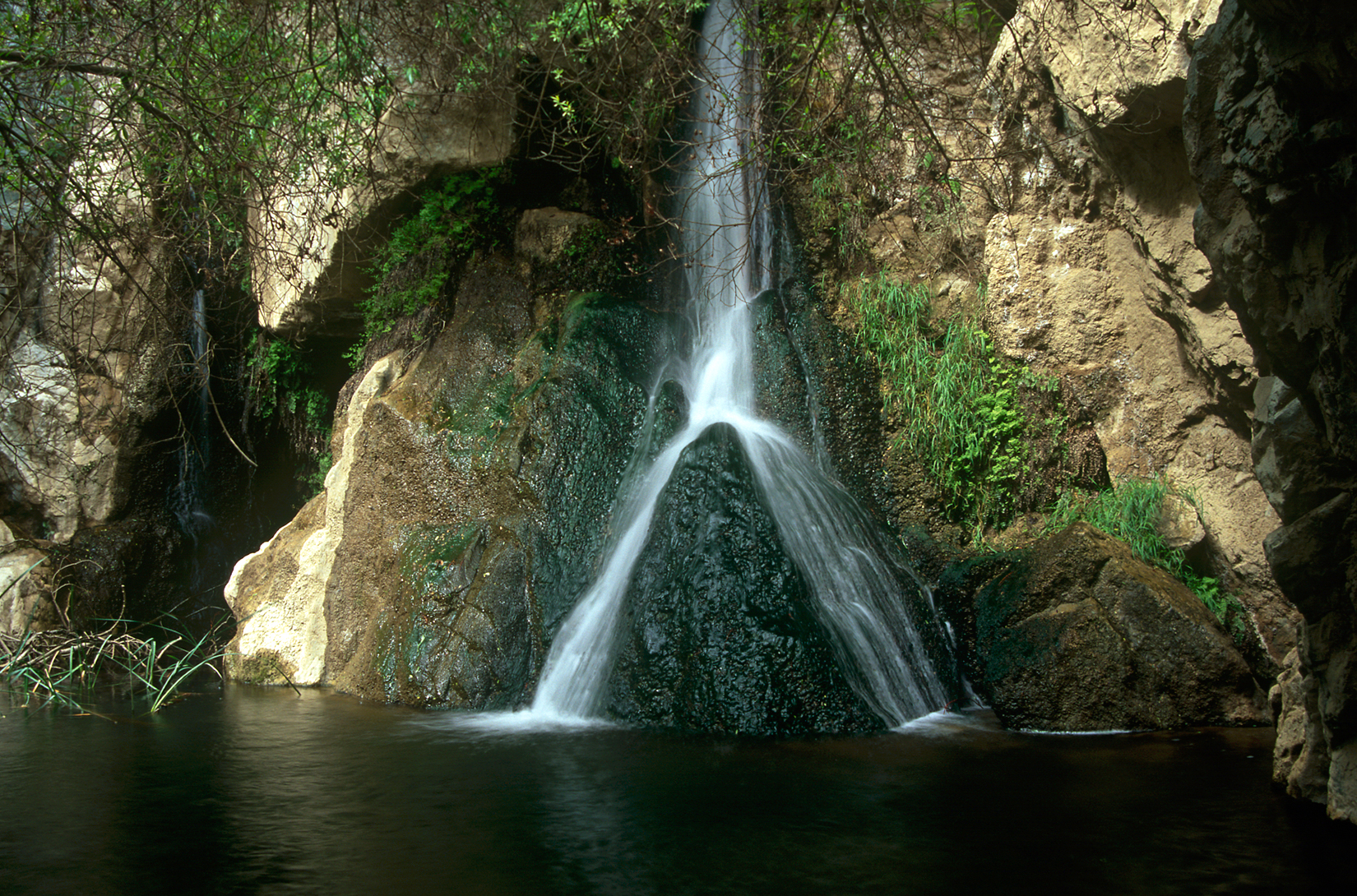
A waterfall about two-thirds of the height of the frame drops down a rounded face of dark, wet rock and splits into two strands near the bottom. The wet rock is near-black and glistening; patches of bright green low plants grow on it and in the crevices beside it, in a band only a few centimeters wide at the water’s edge. To the left and right the rock is pale cream and gray, dry, and crossed by bare woody branches with few leaves. A still, dark pool fills the bottom quarter of the frame, its surface almost unbroken. Sunlight falls on the upper right; the lower left is in shadow.
Surface water and erosion

What Water Leaves Behind

A waterfall is the easy part. The harder question is where the water came from, how long it has been working on this rock, and who else is counting on it.
Grades 9–12Earth Science · Environmental Science45 min3 standards
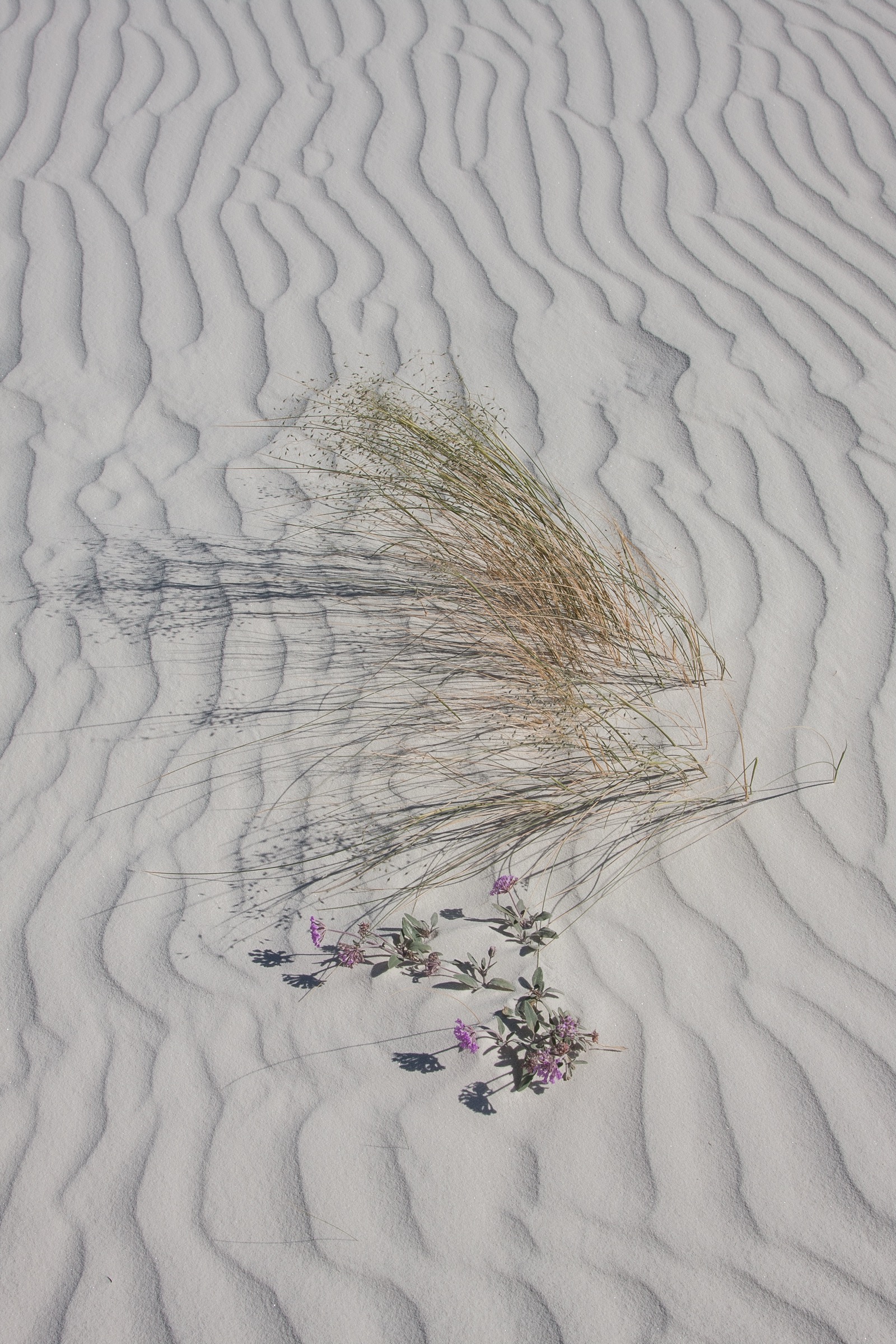
A field of pale, near-white sand fills the whole frame, covered in fine parallel ripples a few centimeters apart running in gentle S-curves from the top of the frame to the bottom. Slightly below center sits a single clump of fine grass, its blades fanning out to the right in tan, olive and pale green, with seed heads. Faint curved arcs are scratched into the sand to the left of the clump. Just below it a low plant with gray-green oval leaves carries several clusters of small bright purple flowers, casting sharp shadows to the left. The light is low and comes from the right.
Wind and deserts

The Same Shape on Two Planets

Ripples in sand, a stone with one face cut flat, a dune field with a mountain range behind it, and the same forms photographed on Mars. One process, four scales, two planets.

Grades 9–12Earth Science · Environmental Science45 min3 standards
The Inquiry Atlas

A nonprofit education project turning original field media into investigations teachers trust. A project of The Method Project, our fiscal sponsor.

Teach

  • All investigations

Organisation

  • About the project
  • The photography
  • Image rights and use
  • Privacy
  • Terms

Support

  • Support the work
  • For teachers

All photography © Greg Smith. Rights and use.