Reuse terms for this investigation’s photography are still being finalised. Read image rights and use before redistributing beyond your own classroom.

What Water Leaves Behind

What can running water tell us about the land it moves through, and how should we share what is left?

A waterfall is the easy part. The harder question is where the water came from, how long it has been working on this rock, and who else is counting on it.

Grades9–10, 11–12
SubjectsEarth Science · Environmental Science
Time15 min · 45 min · 90 min
PreparationLight prep
StandardsHS-ESS2-5 · HS-ESS3-1 · HS-ESS3-4
CostFree

Choose a path

  1. 01

    Setting the stage

    5 min

    Project photograph 1 with no title, no caption and no context. Say nothing about it. Ask two questions, take four or five answers, and do not confirm or correct any of them. Write the guesses on the board, and write the rainfall numbers next to them.
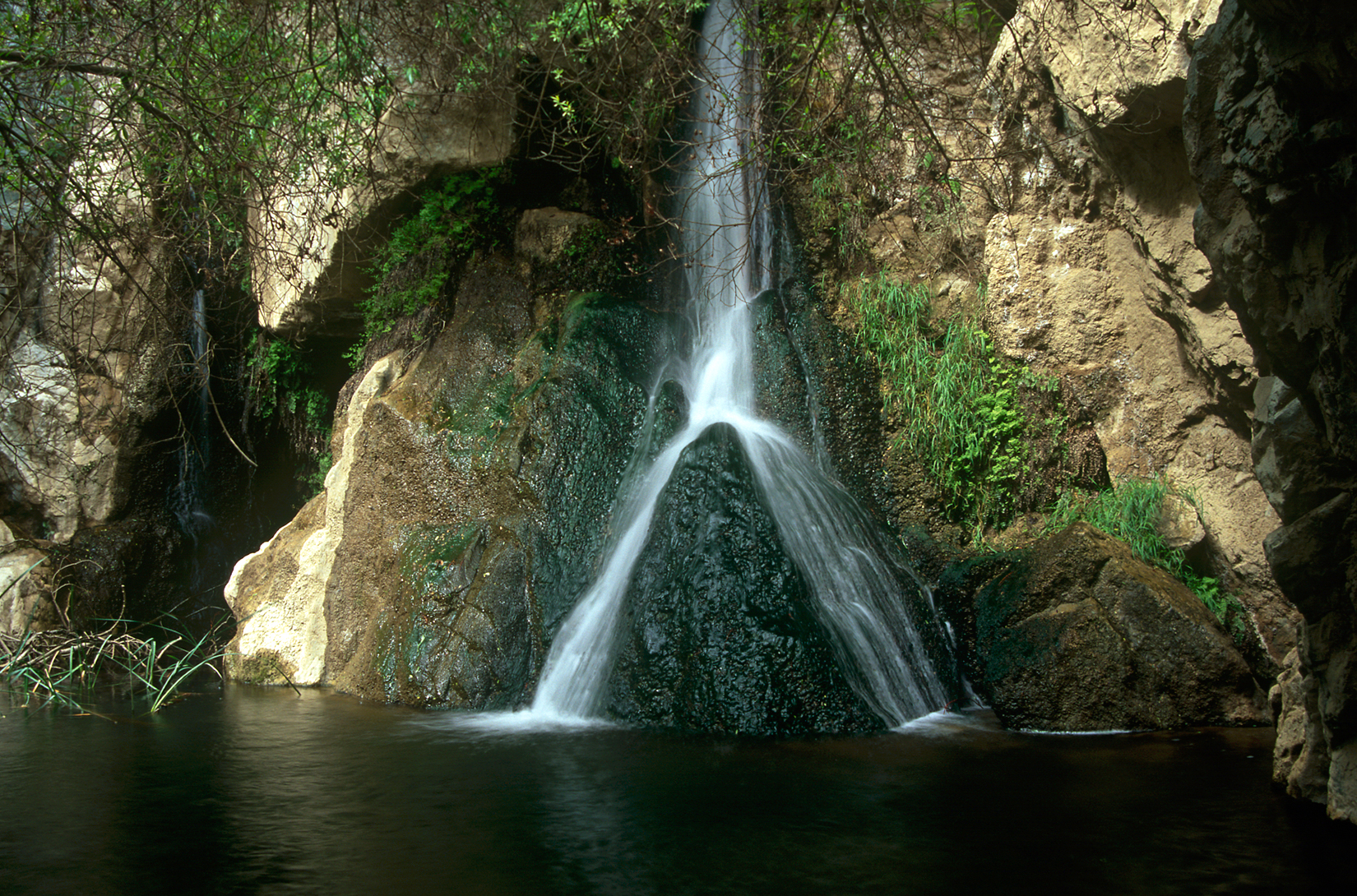
    A waterfall about two-thirds of the height of the frame drops down a rounded face of dark, wet rock and splits into two strands near the bottom. The wet rock is near-black and glistening; patches of bright green low plants grow on it and in the crevices beside it, in a band only a few centimeters wide at the water’s edge. To the left and right the rock is pale cream and gray, dry, and crossed by bare woody branches with few leaves. A still, dark pool fills the bottom quarter of the frame, its surface almost unbroken. Sunlight falls on the upper right; the lower left is in shadow.
    Water drops down a face of dark, wet rock into a still pool. Everything the water is not touching is bare: pale rock, dry branches, no soil worth the name. The green is confined to a narrow band exactly where the water runs, which is the first thing worth noticing and the last thing students notice. Provisional caption — not yet confirmed by the photographer
  2. 02

    Engaging with the story

    10 min

    Show photographs 2 through 5 in order. Give students a job before you start. If Greg’s field account has been recorded, read it aloud while the images are on screen. If it has not, give students a silent minute with each frame instead.
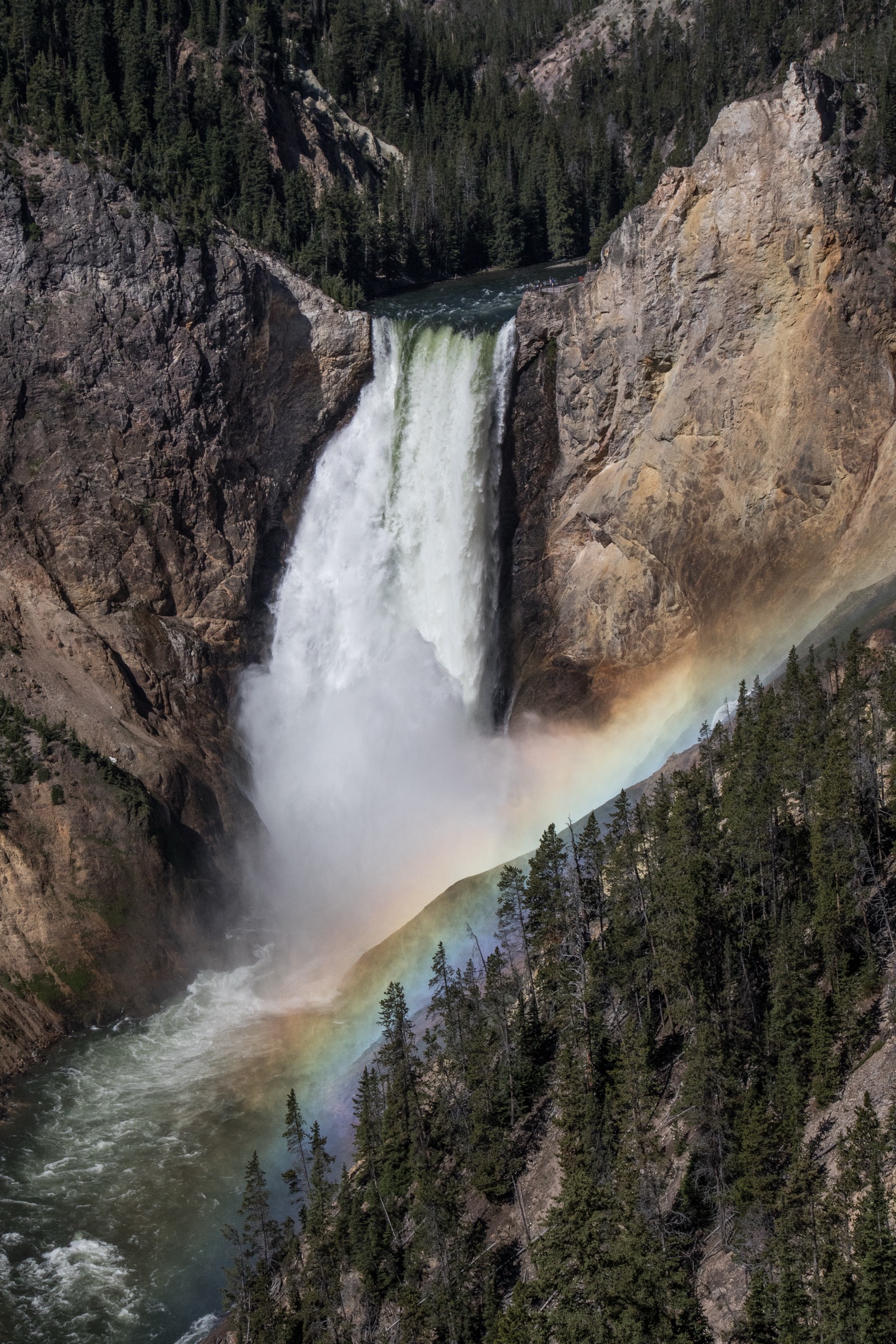
    A wide, white waterfall drops from a notch at the top center of the frame into a deep canyon, falling perhaps its own height again in mist. The canyon walls are tan, ochre and gray rock, steeply bedded, with dark conifer forest on the upper slopes and along the rim. Below the fall the river runs green-gray through rapids at the bottom left. A broad rainbow arcs from the lower center of the frame up to the right, lying across the spray and the forested slope behind it.
    The same process at a scale that will not fit in one glance. A large river drops over a hard step into a canyon it has cut through hundreds of meters of rock. The rainbow standing in the air below the fall is a measure of how much water is being thrown into the air, and how hard. Provisional caption — not yet confirmed by the photographer
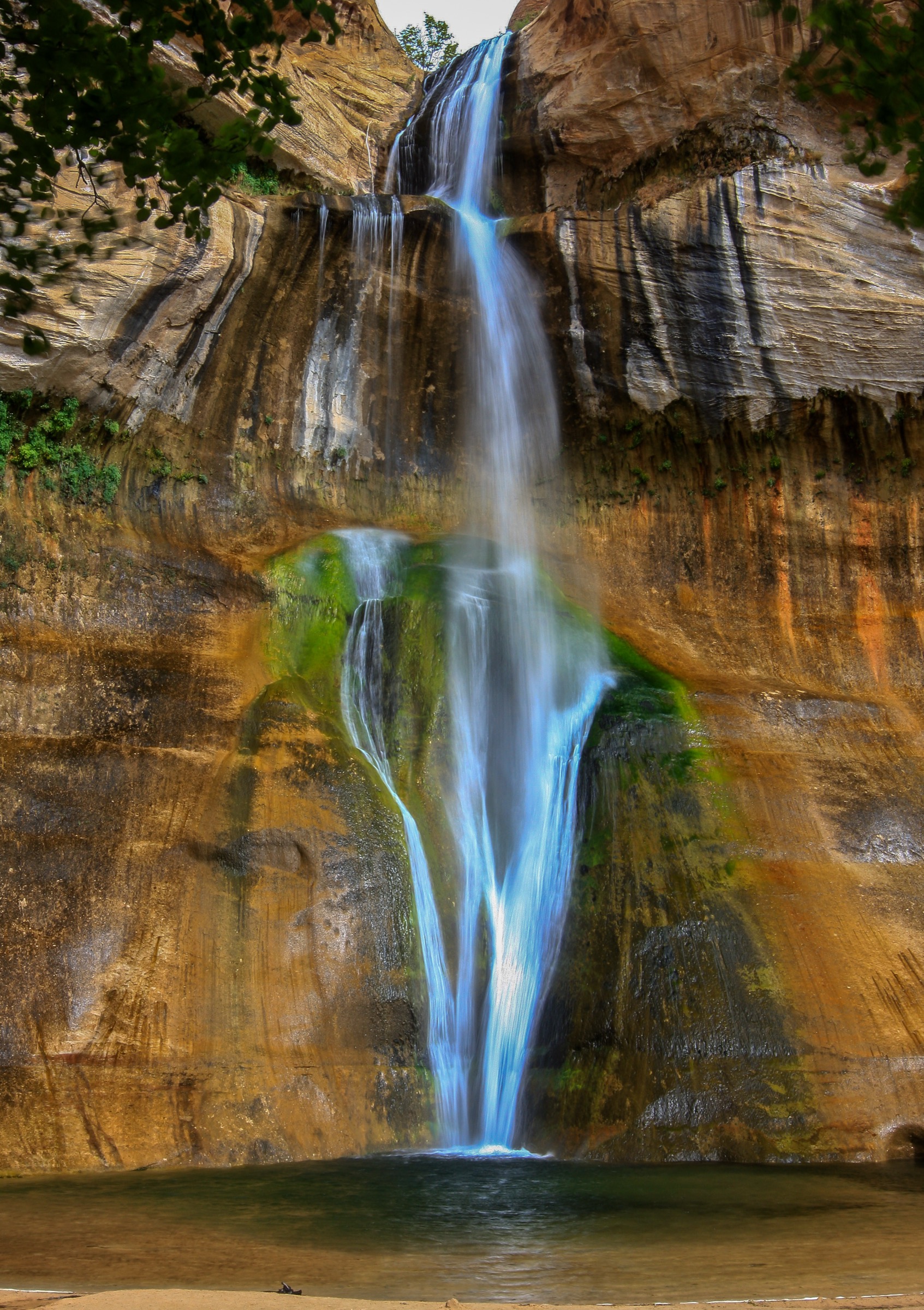
    A narrow white waterfall drops the full height of the frame down a vertical sandstone wall of gold, tan and rust-orange rock. The rock is crossed by long dark vertical streaks. In the middle of the wall, on either side of the falling water, a broad patch of bright green low growth covers the rock where water spreads across it. At the foot of the fall is a shallow dark green pool, and in the foreground a pale sand and gravel beach. A few green leafy branches hang into the top left corner.
    A fall on a sandstone wall, with three things worth reading in one frame: the dark vertical streaks where water has run down the rock for a very long time, the green growing only in the wet zone, and the shallow pool with a sand beach at the bottom — sand that used to be part of the wall. Provisional caption — not yet confirmed by the photographer
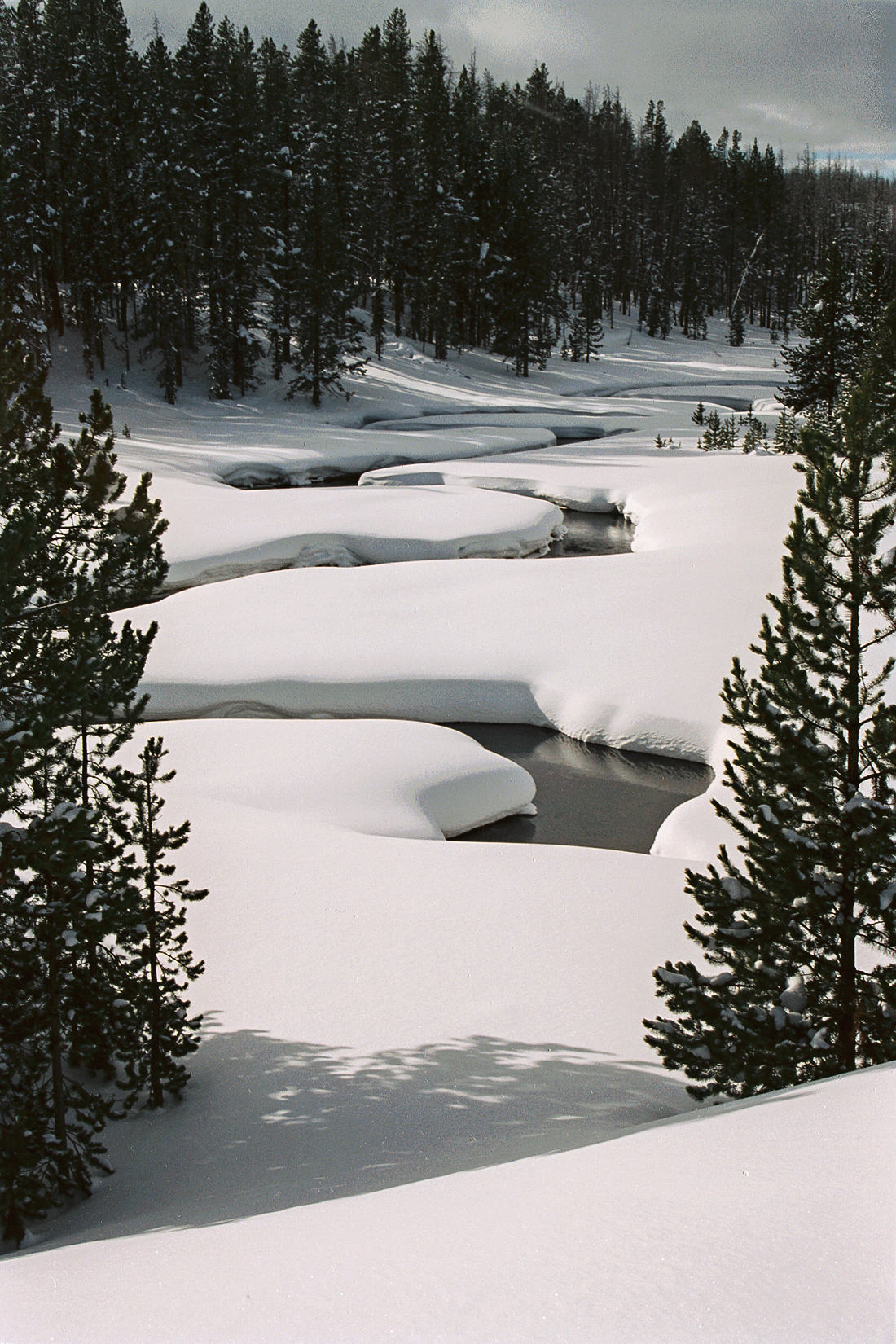
    A stream valley under deep, smooth snow, photographed from slightly above. The snow lies in broad rounded lobes that trace the meanders of the buried channel from the foreground to the middle distance, with a few narrow dark gaps of open water showing between them. Dark green conifers, snow on their branches, stand in the foreground on both sides and cover the hillside across the valley. The sky at the top of the frame is heavy gray cloud with a pale break near the right edge.
    The same kind of stream, in the season when it appears to be doing nothing. Snow has buried the channel except for a few dark gaps of open water. Whether the stream is working less, or working on a different schedule, is the question — and the photograph cannot settle it. Provisional caption — not yet confirmed by the photographer
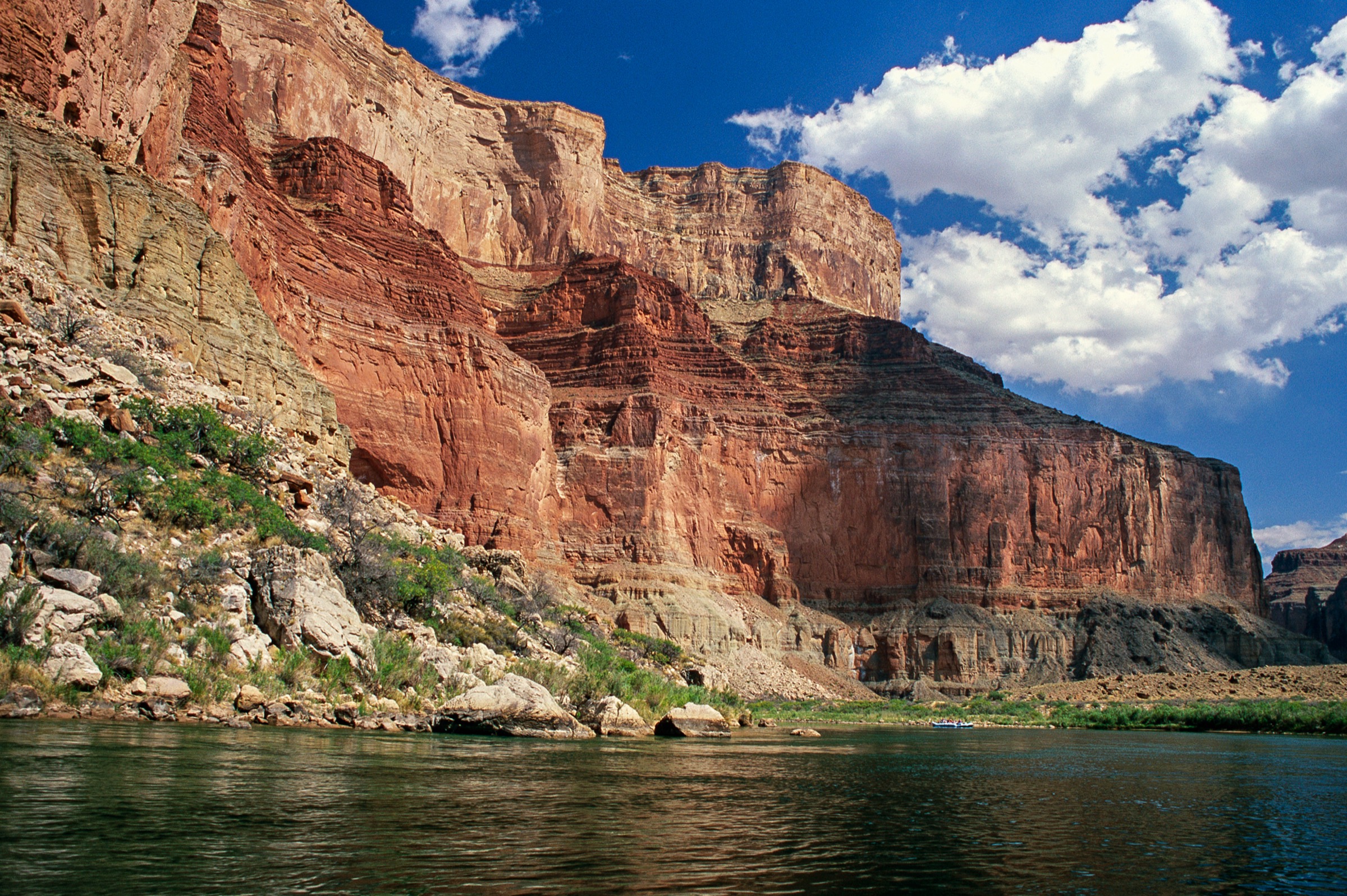
    A wide river, green-gray and lightly rippled, fills the bottom third of the frame. On the far side a cliff rises for most of the frame’s height in horizontal bands of red, ochre, cream and gray rock, deeply notched by side gullies, with a broad ledge partway up. The near-left shoreline is a slope of pale broken boulders with low green shrubs. A small white raft carrying several people sits on the water at the right, close to the far bank, and is a tiny fraction of the cliff’s height. The sky is deep blue with large white cumulus cloud on the right.
    A raft with people in it, near the far bank, against a cliff of layered rock. The raft is a few meters long. Use it to measure the cliff, then ask which of the two the river made. Provisional caption — not yet confirmed by the photographer
  3. 03

    Working the evidence

    15 min

    The core of the investigation. Students work in pairs on the handout, using the Observe, Reflect, Question structure the Library of Congress developed for reading primary sources. A photograph is a primary source, and this is how it is done. Put photograph 1 back on screen and leave it there.

    A waterfall about two-thirds of the height of the frame drops down a rounded face of dark, wet rock and splits into two strands near the bottom. The wet rock is near-black and glistening; patches of bright green low plants grow on it and in the crevices beside it, in a band only a few centimeters wide at the water’s edge. To the left and right the rock is pale cream and gray, dry, and crossed by bare woody branches with few leaves. A still, dark pool fills the bottom quarter of the frame, its surface almost unbroken. Sunlight falls on the upper right; the lower left is in shadow.
    Water drops down a face of dark, wet rock into a still pool. Everything the water is not touching is bare: pale rock, dry branches, no soil worth the name. The green is confined to a narrow band exactly where the water runs, which is the first thing worth noticing and the last thing students notice. Provisional caption — not yet confirmed by the photographer
  4. 04

    Delving deeper

    10 min

    Now name the mechanism: much of the permanent water in dry country is groundwater, recharged somewhere else and often long ago, reaching the surface where the geology forces it out. Then hand out the data.

  5. 05

    Reflecting and projecting

    15 min

    The claim, evidence and reasoning assignment. Two parts. Both appear on the student handout as Part A and Part B.

The evidence

A waterfall about two-thirds of the height of the frame drops down a rounded face of dark, wet rock and splits into two strands near the bottom. The wet rock is near-black and glistening; patches of bright green low plants grow on it and in the crevices beside it, in a band only a few centimeters wide at the water’s edge. To the left and right the rock is pale cream and gray, dry, and crossed by bare woody branches with few leaves. A still, dark pool fills the bottom quarter of the frame, its surface almost unbroken. Sunlight falls on the upper right; the lower left is in shadow.

Water drops down a face of dark, wet rock into a still pool. Everything the water is not touching is bare: pale rock, dry branches, no soil worth the name. The green is confined to a narrow band exactly where the water runs, which is the first thing worth noticing and the last thing students notice.

Location not yet confirmed · Greg Smith

Provisional caption — not yet confirmed by the photographer

A wide, white waterfall drops from a notch at the top center of the frame into a deep canyon, falling perhaps its own height again in mist. The canyon walls are tan, ochre and gray rock, steeply bedded, with dark conifer forest on the upper slopes and along the rim. Below the fall the river runs green-gray through rapids at the bottom left. A broad rainbow arcs from the lower center of the frame up to the right, lying across the spray and the forested slope behind it.

The same process at a scale that will not fit in one glance. A large river drops over a hard step into a canyon it has cut through hundreds of meters of rock. The rainbow standing in the air below the fall is a measure of how much water is being thrown into the air, and how hard.

Location not yet confirmed · Greg Smith

Provisional caption — not yet confirmed by the photographer

A narrow white waterfall drops the full height of the frame down a vertical sandstone wall of gold, tan and rust-orange rock. The rock is crossed by long dark vertical streaks. In the middle of the wall, on either side of the falling water, a broad patch of bright green low growth covers the rock where water spreads across it. At the foot of the fall is a shallow dark green pool, and in the foreground a pale sand and gravel beach. A few green leafy branches hang into the top left corner.

A fall on a sandstone wall, with three things worth reading in one frame: the dark vertical streaks where water has run down the rock for a very long time, the green growing only in the wet zone, and the shallow pool with a sand beach at the bottom — sand that used to be part of the wall.

Location not yet confirmed · Greg Smith

Provisional caption — not yet confirmed by the photographer

A stream valley under deep, smooth snow, photographed from slightly above. The snow lies in broad rounded lobes that trace the meanders of the buried channel from the foreground to the middle distance, with a few narrow dark gaps of open water showing between them. Dark green conifers, snow on their branches, stand in the foreground on both sides and cover the hillside across the valley. The sky at the top of the frame is heavy gray cloud with a pale break near the right edge.

The same kind of stream, in the season when it appears to be doing nothing. Snow has buried the channel except for a few dark gaps of open water. Whether the stream is working less, or working on a different schedule, is the question — and the photograph cannot settle it.

Location not yet confirmed · Greg Smith

Provisional caption — not yet confirmed by the photographer

A wide river, green-gray and lightly rippled, fills the bottom third of the frame. On the far side a cliff rises for most of the frame’s height in horizontal bands of red, ochre, cream and gray rock, deeply notched by side gullies, with a broad ledge partway up. The near-left shoreline is a slope of pale broken boulders with low green shrubs. A small white raft carrying several people sits on the water at the right, close to the far bank, and is a tiny fraction of the cliff’s height. The sky is deep blue with large white cumulus cloud on the right.

A raft with people in it, near the far bank, against a cliff of layered rock. The raft is a few meters long. Use it to measure the cliff, then ask which of the two the river made.

Location not yet confirmed · Greg Smith

Provisional caption — not yet confirmed by the photographer