Reuse terms for this investigation’s photography are still being finalised. Read image rights and use before redistributing beyond your own classroom.
The Same Shape on Two Planets
What can a shape in the sand tell us about a force we cannot see — and what happens when we loosen the ground it comes from?
Ripples in sand, a stone with one face cut flat, a dune field with a mountain range behind it, and the same forms photographed on Mars. One process, four scales, two planets.
Choose a path
- 01
Setting the stage
Project photograph 1 with no title, no caption and no context. Say nothing about it. Ask one question — “Something made this pattern. What?” — and take four or five answers. Do not confirm or correct any of them. Write the guesses on the board. Then ask a second question and leave it open: “There are faint curved lines in the sand beside the grass. What drew them?”
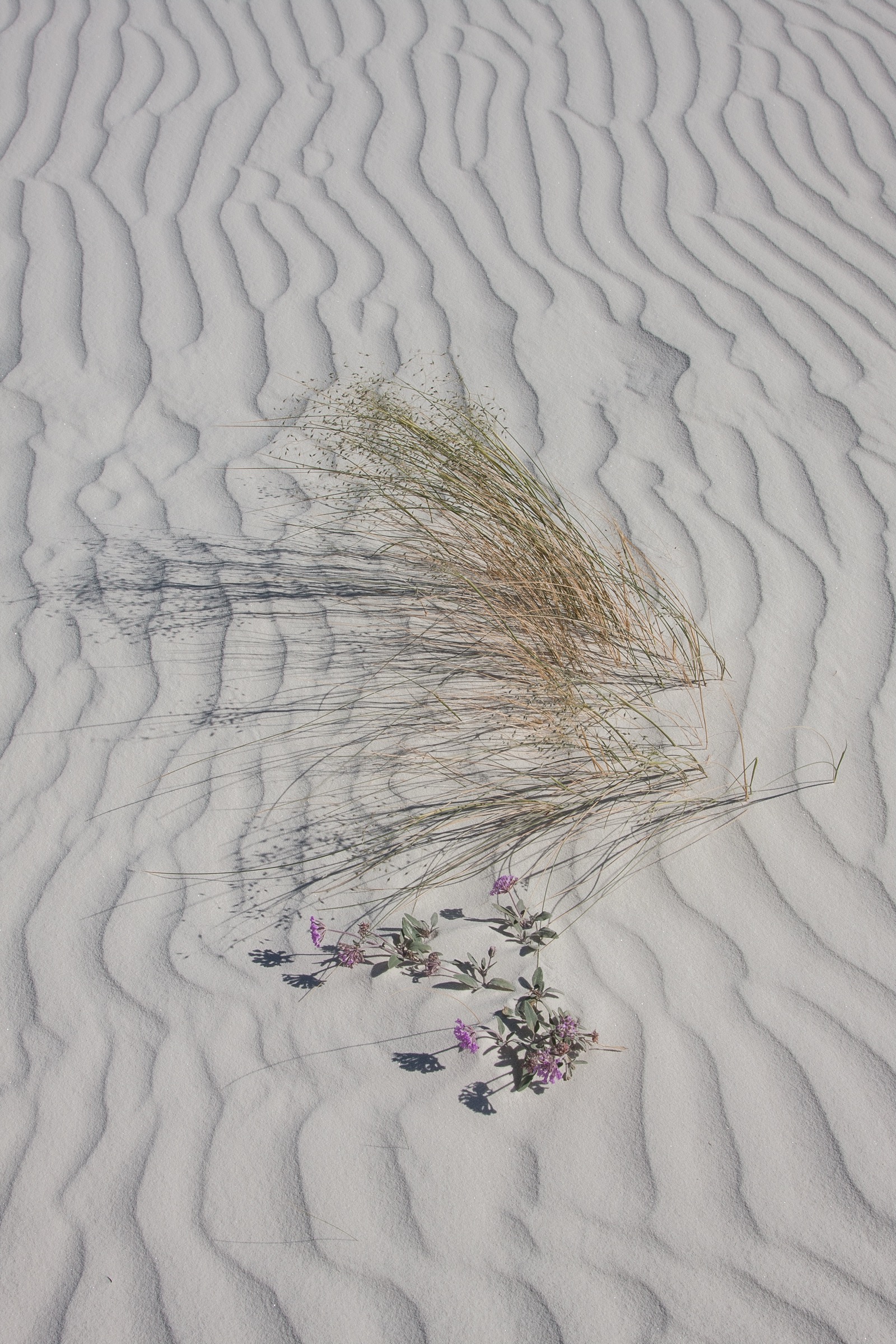
Pale sand, ripple after ripple, and one clump of grass. Look at the ripple spacing — it is regular, and it changes where the grass sits. Look at the faint curved lines scratched into the sand beside the clump. Something drew them. The lesson starts by asking what. - 02
Engaging with the story
Show photographs 2, 3 and 5 — not 4 yet. Give students a job before you start. If Greg’s field account has been recorded, read it aloud while the images are on screen. If it has not, give students a silent minute with each frame instead.
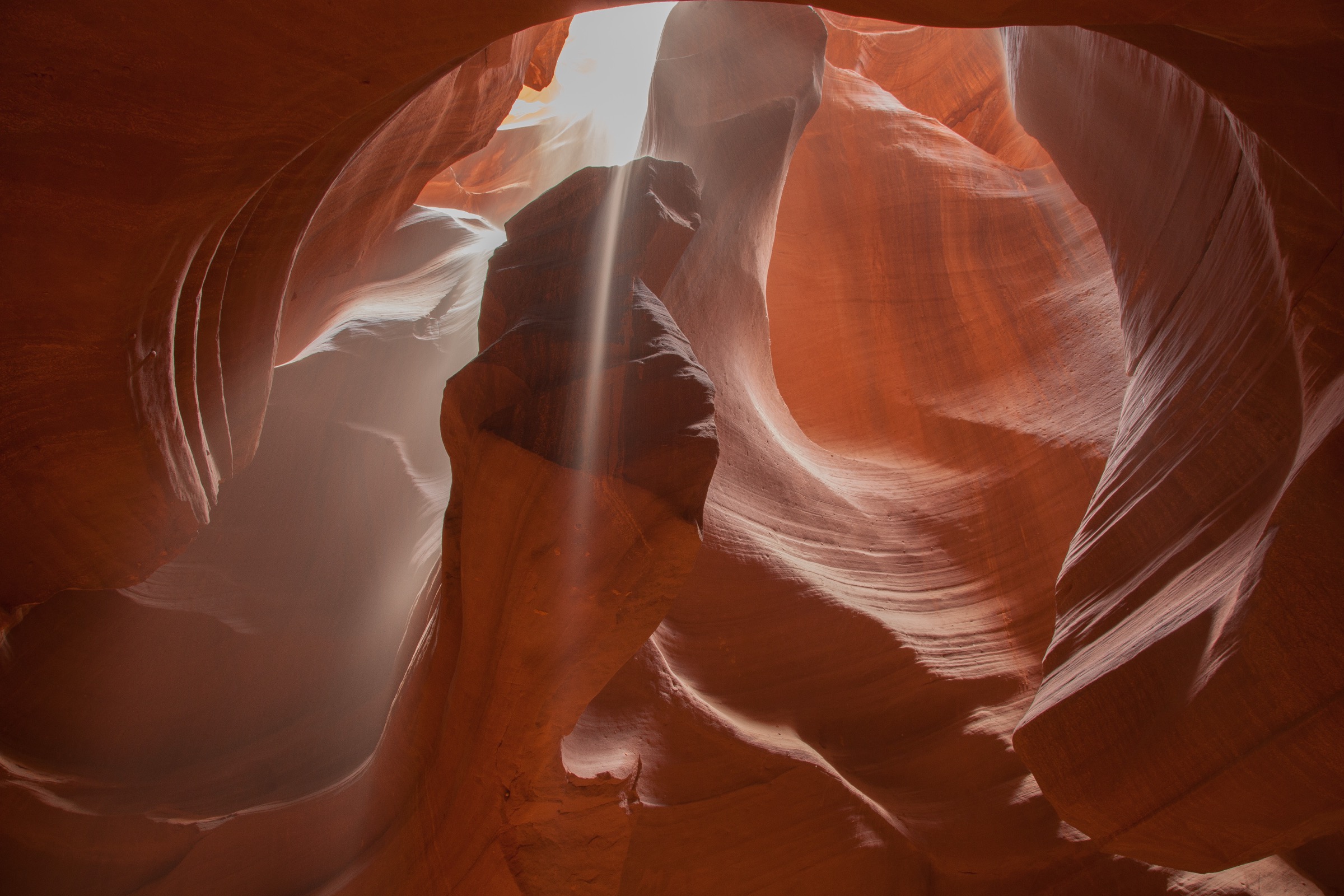
A narrow canyon in orange rock, its walls smooth, curved and layered like something poured rather than broken. A single shaft of daylight comes in from a gap far above, and fine particles are falling through it. Two very different forces could have shaped this. Deciding which is the work. 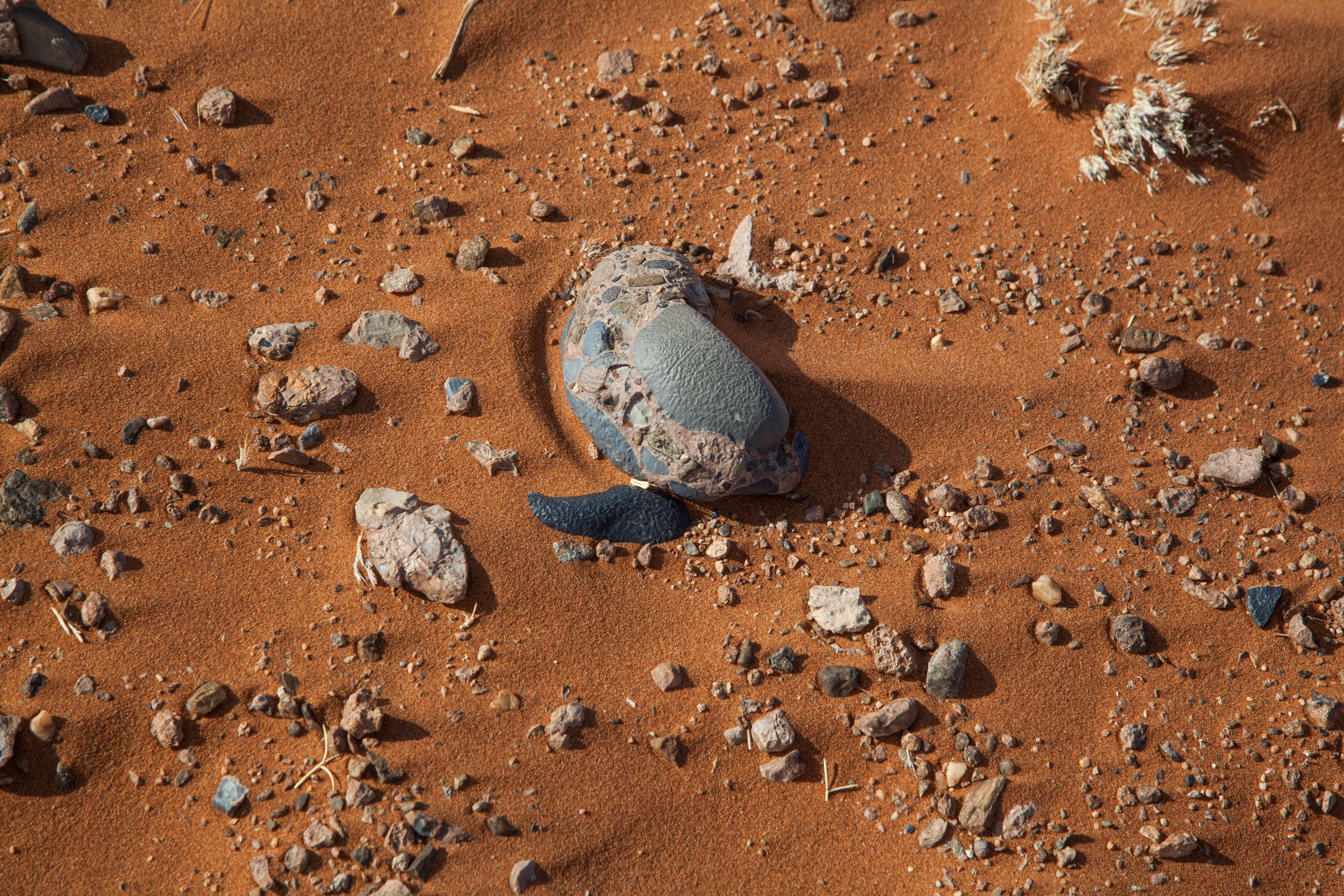
Red sand, scattered pebbles, and one stone that is not like its neighbours: a smooth, flat, pale gray face, sharply bounded, on a rock that is otherwise rounded and knobbly. The neighbours are rounded. This one has been cut. 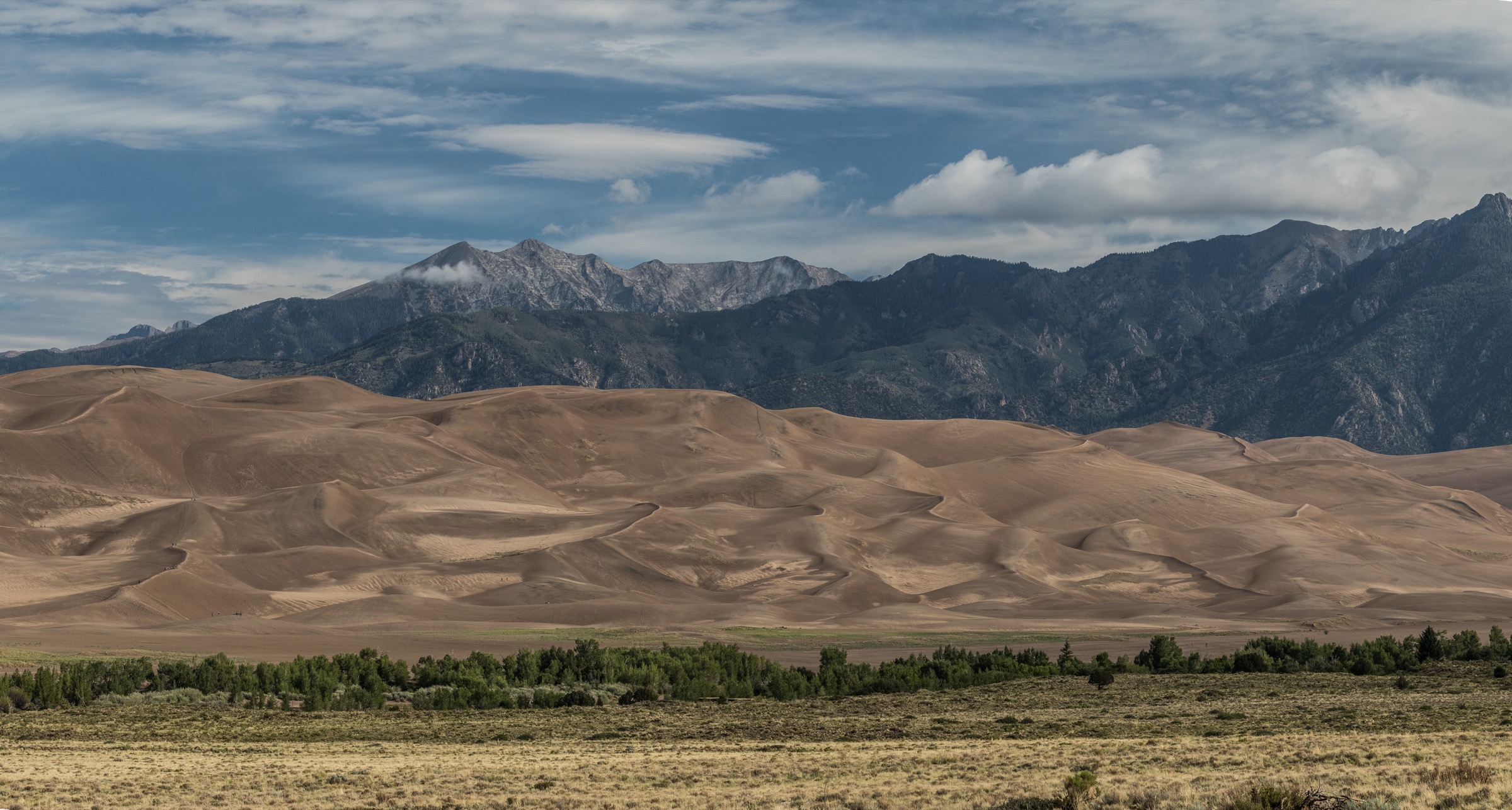
The same process, at the largest scale it reaches on this planet. A field of dunes hundreds of meters high, with a mountain range standing immediately behind it. Ask students why the sand stopped here, of all places — the answer is in the mountains. - 03
Working the evidence
The core of the investigation. Students work in pairs on the handout, using the Observe, Reflect, Question structure the Library of Congress developed for reading primary sources. Put photograph 1 back on screen and leave it there.
Pale sand, ripple after ripple, and one clump of grass. Look at the ripple spacing — it is regular, and it changes where the grass sits. Look at the faint curved lines scratched into the sand beside the clump. Something drew them. The lesson starts by asking what. - 04
Delving deeper
Now name the mechanism: wind moves material three ways — suspension, saltation and creep — and grain size decides which. Give them the one-centimeter figure and let it land. Then show photograph 4 for the first time and say only, “This one was taken on Mars.” Give it a moment. Then hand out the data.
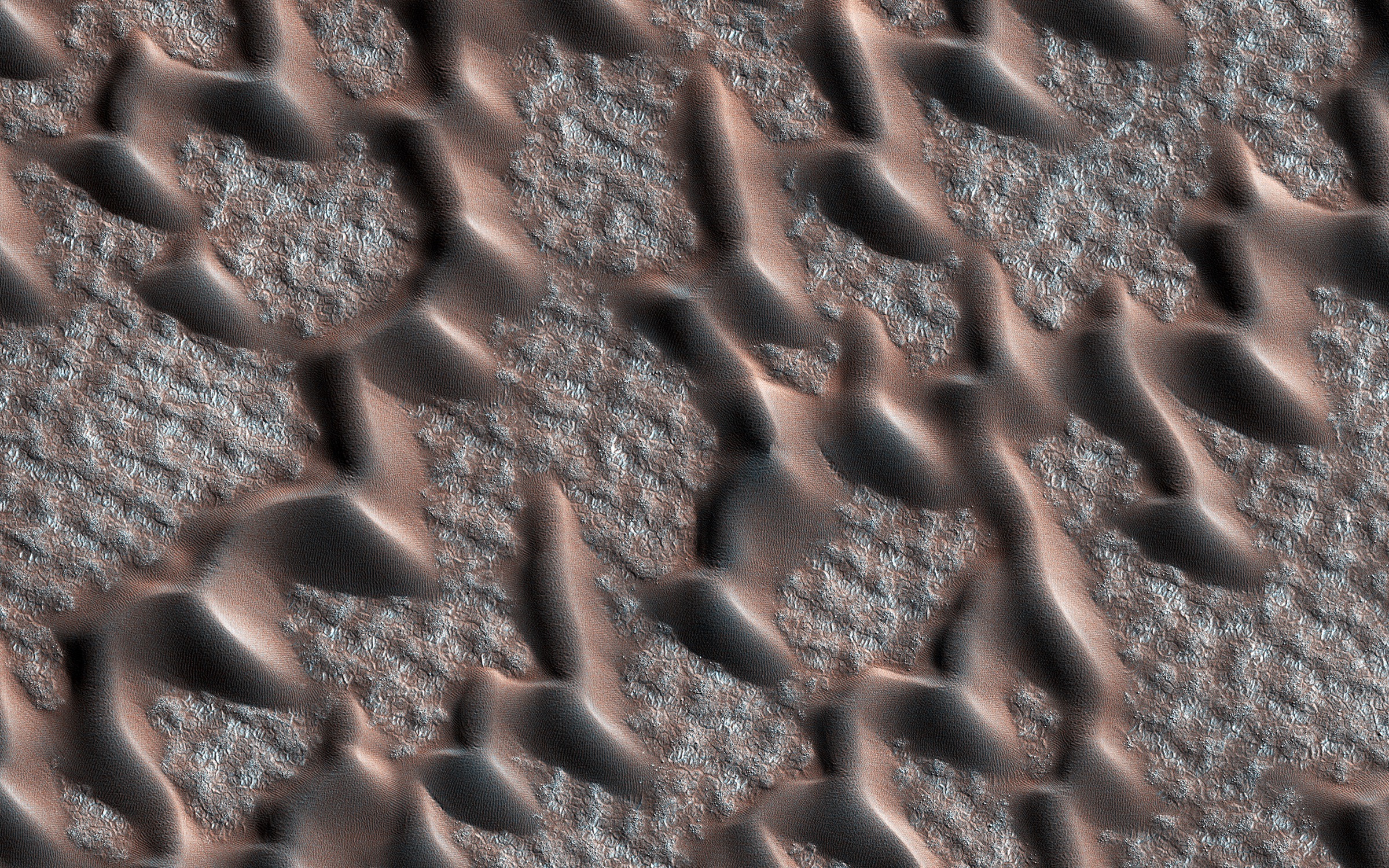
The same forms, on another planet. Dark dunes march in rows across pale ground near Mars’s permanent polar cap. The air here is about one percent as dense as the air at sea level on Earth. Nothing about the shapes tells you that. - 05
Reflecting and projecting
The claim, evidence and reasoning assignment. Two parts. Both appear on the student handout as Part A and Part B.
The evidence
Pale sand, ripple after ripple, and one clump of grass. Look at the ripple spacing — it is regular, and it changes where the grass sits. Look at the faint curved lines scratched into the sand beside the clump. Something drew them. The lesson starts by asking what.
A narrow canyon in orange rock, its walls smooth, curved and layered like something poured rather than broken. A single shaft of daylight comes in from a gap far above, and fine particles are falling through it. Two very different forces could have shaped this. Deciding which is the work.
Red sand, scattered pebbles, and one stone that is not like its neighbours: a smooth, flat, pale gray face, sharply bounded, on a rock that is otherwise rounded and knobbly. The neighbours are rounded. This one has been cut.
The same forms, on another planet. Dark dunes march in rows across pale ground near Mars’s permanent polar cap. The air here is about one percent as dense as the air at sea level on Earth. Nothing about the shapes tells you that.
The same process, at the largest scale it reaches on this planet. A field of dunes hundreds of meters high, with a mountain range standing immediately behind it. Ask students why the sand stopped here, of all places — the answer is in the mountains.
Did you teach this?
Three questions, two minutes, and it shapes the next investigation we build.