Student handout
The Same Shape on Two Planets
What can a shape in the sand tell us about a force we cannot see — and what happens when we loosen the ground it comes from?
Print this handout
The photographs
Photograph 1 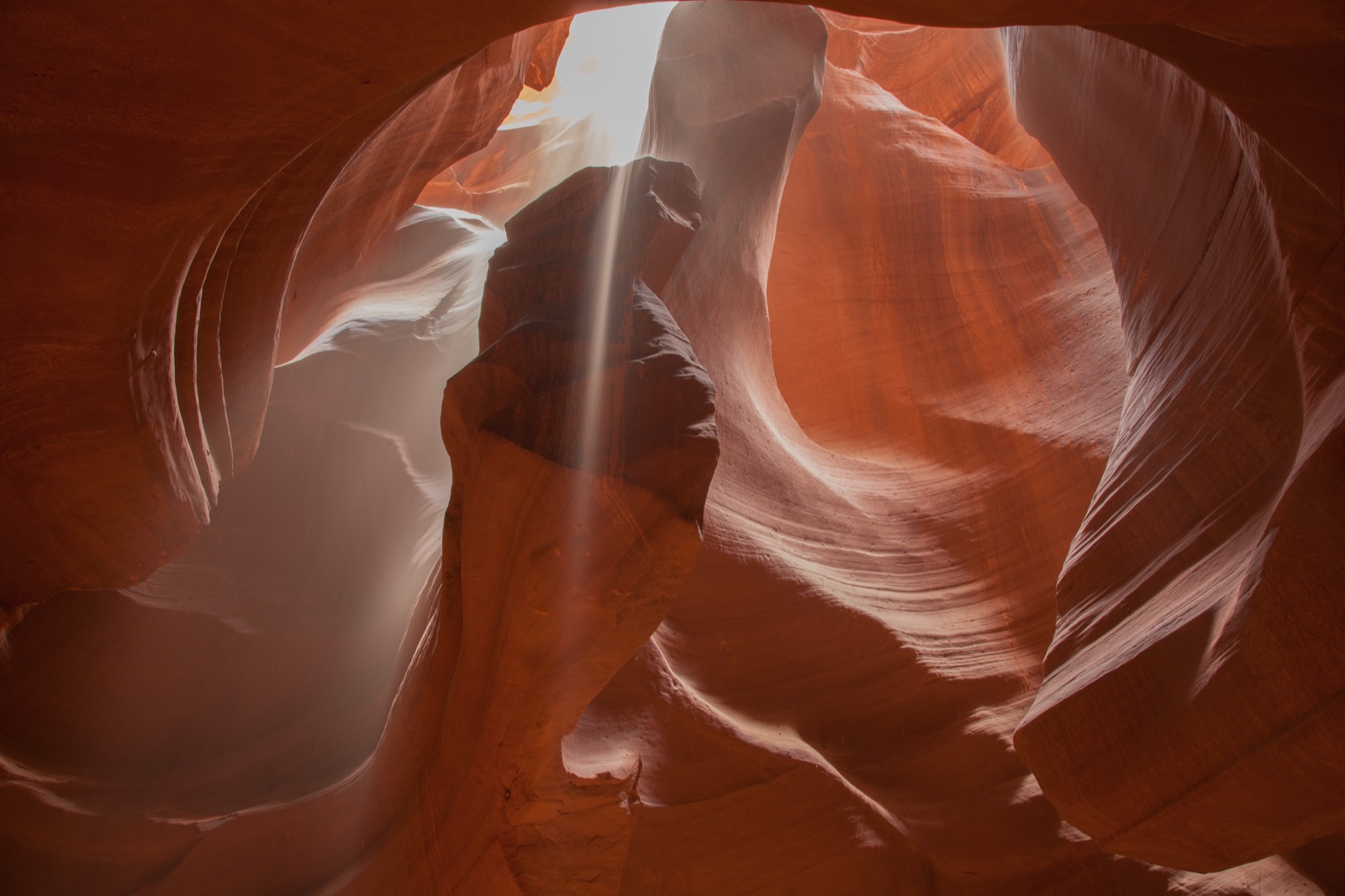
Photograph 2 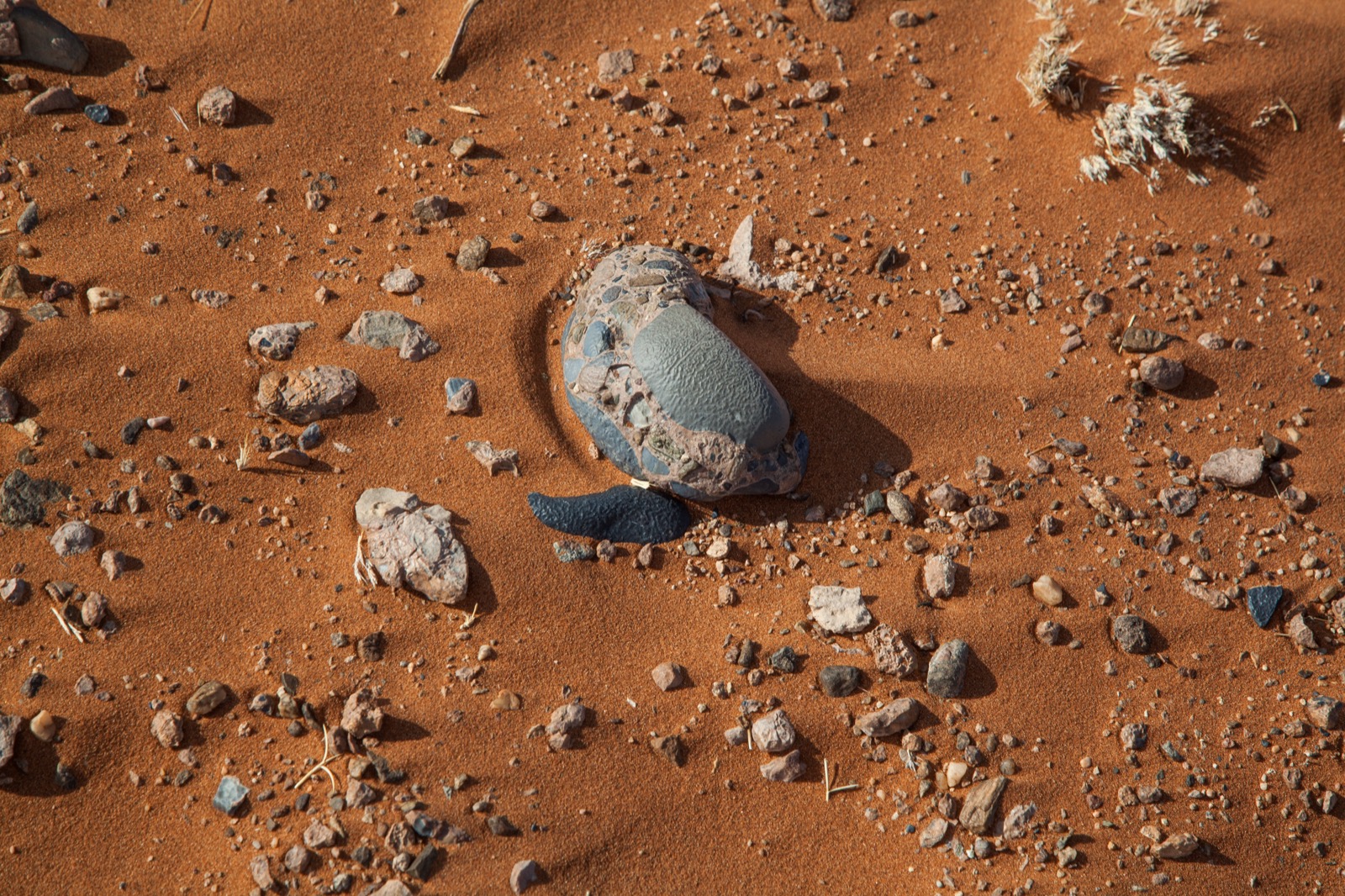
Photograph 3 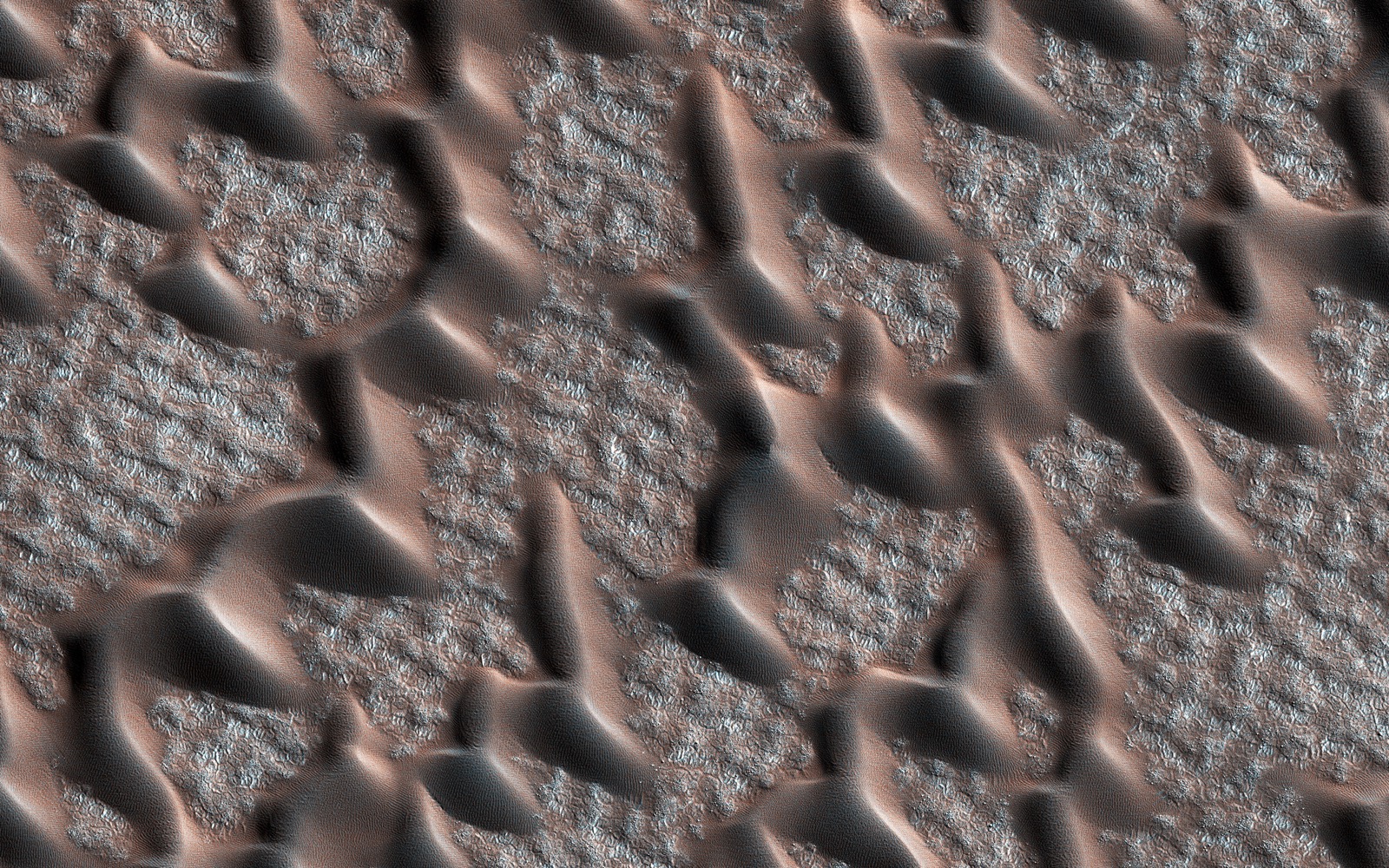
Photograph 4 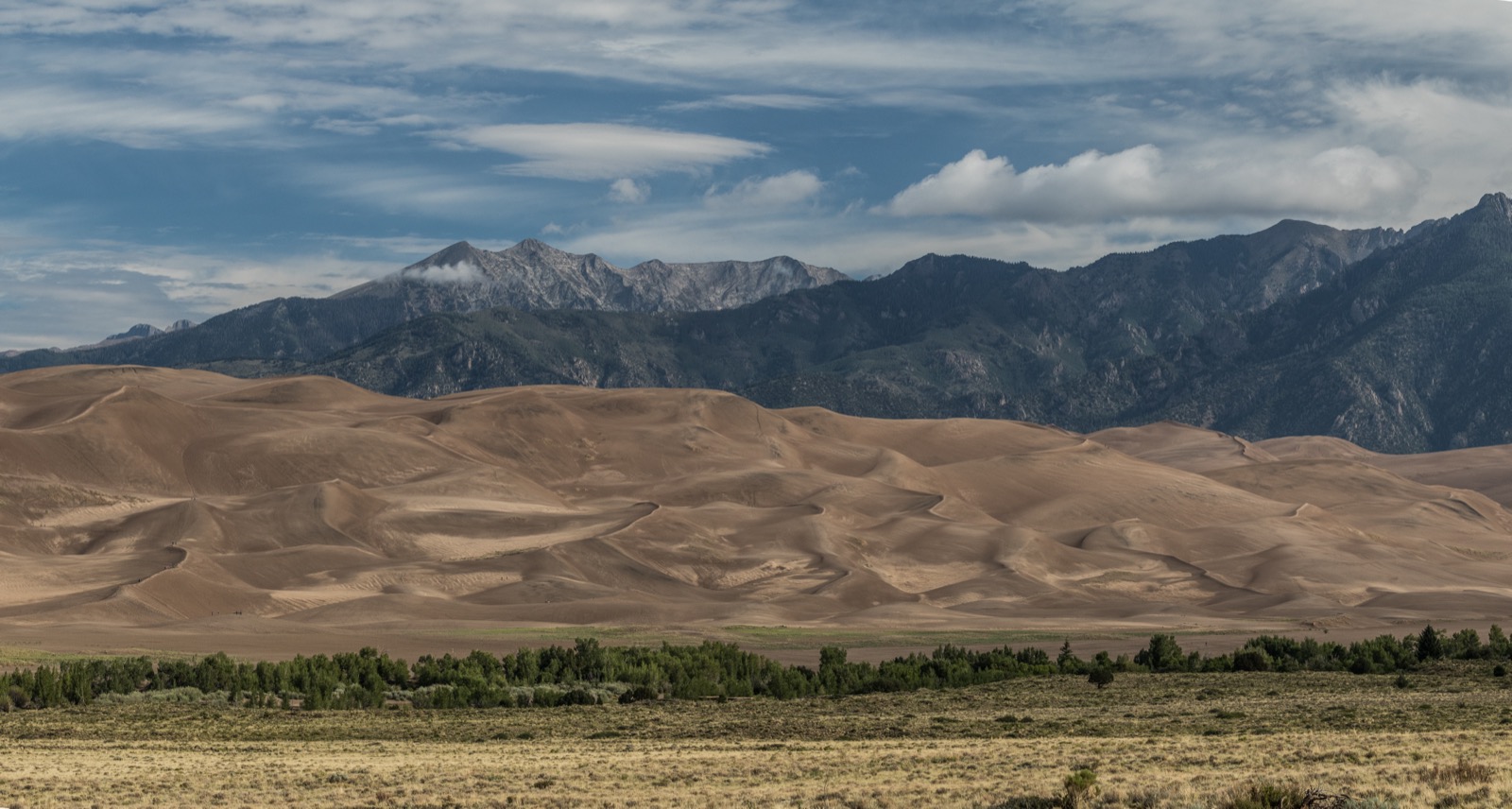
Photograph 5
01. Setting the stage
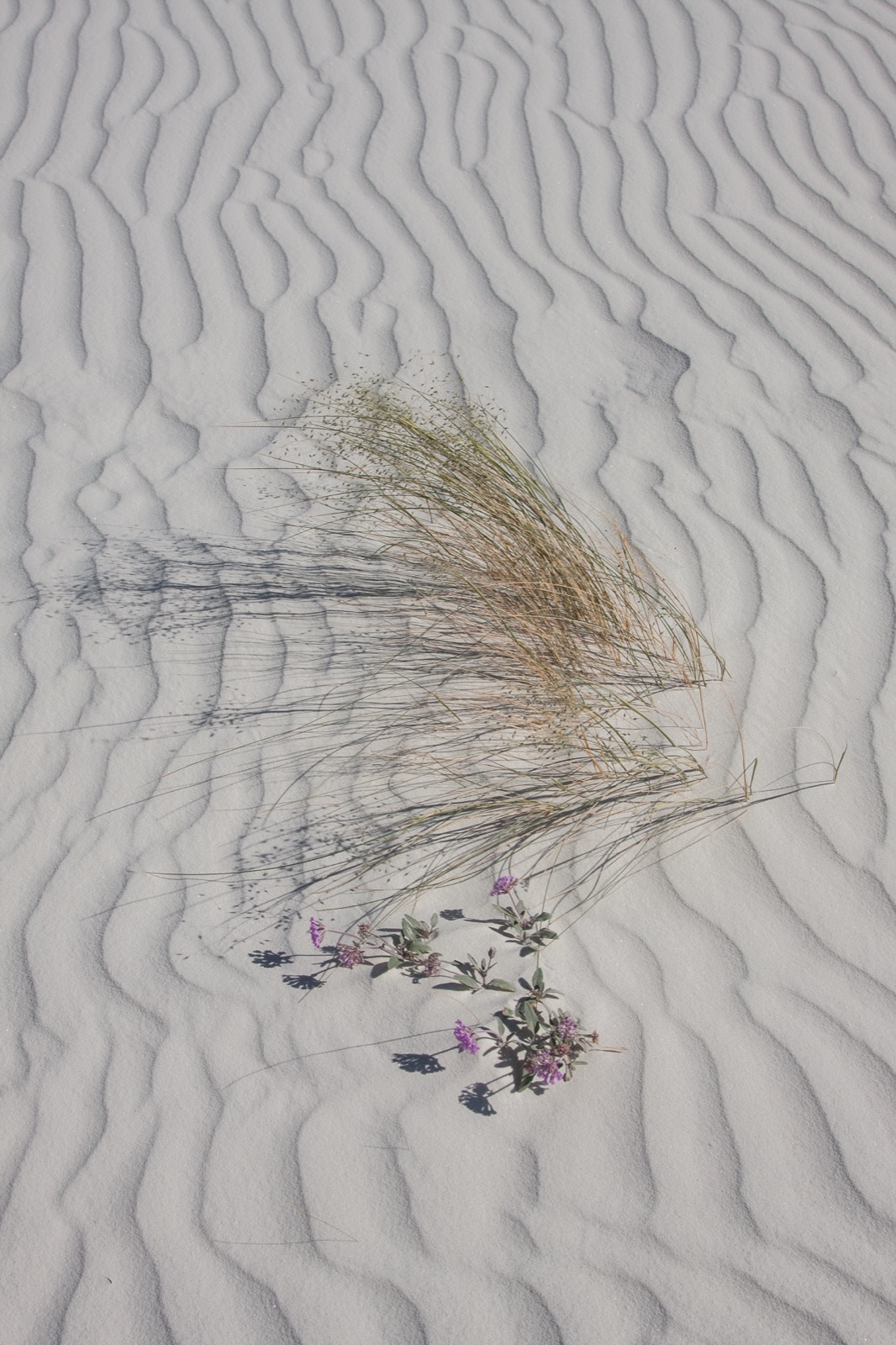
First guess. Look at photograph 1. Something made this pattern. What?
And a second one. There are faint curved lines scratched in the sand beside the clump of grass. What drew them?
Do not erase either of these. We are coming back to them.
02. Engaging with the story
For each one, write down one force that could have shaped it, and one piece of evidence in the photograph that supports your answer.
03. Working the evidence
Observe (5 minutes). Record only what is visible. No explanations yet.
- What do you notice first?
- How far apart are the ripples? Are they the same everywhere in the frame?
- Which way do the ripple crests run? Are they straight?
- What materials, textures and colors can you see? List everything.
- Look again for a full silent minute. What did you miss?
Reflect (6 minutes). Now generate and test explanations.
- Which direction was the wind blowing, and how do you know?
- The ripples change near the grass clump. What is the grass doing to the wind?
- What drew the curved lines? What would you need to see to be sure?
- Compare photograph 1 with photograph 5. Is a dune just a very large ripple?
- Photograph 2 shows a narrow canyon with smooth, curved walls. Two different forces could have shaped it. Which do you think it was, and what in the photograph makes you think so?
- What is missing from these images?
Question (4 minutes).
- What do you wonder about: who, what, when, where, why, how?
- Standing there with any instrument you wanted, what would you measure first?
04. Delving deeper
Read all three tables before you answer anything.
| Mode | What moves | How it moves | How far it goes |
|---|---|---|---|
| Suspension | Particles less than 0.2 millimetres across | Held up by the air and scattered aloft as dust or haze | Indefinitely — hundreds of miles |
| Saltation | Sand-size grains | A series of jumps or skips, lifted no more than one centimeter above the ground, at one-half to one-third the wind speed | Short hops; stays local |
| Surface creep | Grains too heavy to hop | Pushed along by other grains landing on them | Slow — but as much as 25 percent of all grain movement in a desert |
Source: U.S. Geological Survey, Deserts: Geology and Resources.
| Measure | Mars | Earth |
|---|---|---|
| Surface pressure | 6.36 mb | 1014 mb |
| Surface density | About 0.016 kg/m³ | 1.217 kg/m³ |
| Surface gravity | 3.73 m/s² | 9.82 m/s² |
| Main gas in the air | Carbon dioxide, 95.1 percent | Nitrogen, 78.08 percent |
| Are the dunes moving today? | Yes — dunes as thick as 61 meters have been measured moving as whole units | Yes |
Sources: NASA/NSSDC planetary fact sheets; NASA/JPL, 2012.
| Measure | Value |
|---|---|
| Where it comes from | Dry soils — more of it once the crust holding the surface together is broken |
| Where it lands | Downwind, including on mountain snow hundreds of miles away |
| What it does there | Makes the snow darker, so it absorbs more sunlight and melts earlier |
| Measured effect on peak runoff | On average 3 weeks earlier at Lees Ferry, Arizona, under heavier dust |
| Measured effect on the year’s total runoff | Reduced by more than 1.0 billion cubic meters, about 5 percent of the annual average |
| When it started | A fivefold increase in dust was already under way by the late 1800s |
Source: Painter et al., PNAS, 2010.
05. Reflecting and projecting
Part A. Read the evidence. Photograph 4 shows a landform on Mars that looks like landforms on Earth. Based on the photographs alone, what can you conclude about the process that made it — and what can you not conclude about Mars?
Part B. Make the call. A land management agency proposes closing a stretch of dryland to vehicle use. The soil there is a known dust source; the dust settles on mountain snow in another state and moves that river’s peak runoff earlier. Local people use the area for recreation and access, and the benefit falls hundreds of miles away on people who will never know. Should the closure happen?
- Your claim. State your position in one or two sentences.
- Your evidence. At least two specific observations from the photographs, plus one item from Tables 1, 2 or 3. Name the source of each.
- Your reasoning. Explain the scientific and practical principles that connect your evidence to your claim.
Students may submit as a written paragraph, a recorded verbal explanation, an annotated photograph, or a labeled diagram.
06. Take action
Choose one.
- Your own wind. What is the prevailing wind direction where you live? Find a surface near your school that it has shaped — a snowdrift, a sand pile, a drift of leaves against a fence. Photograph it and say which way the wind was blowing.
- Mars, this year. Find a pair of HiRISE images of the same Martian dune field taken a Mars year apart. How much moved, and how do you know it is not a difference in lighting?
- Where the dust comes from. Find a dust-source region in the western United States. What changed there, when, and who ended up paying for it?
07. The rebuttal
Your rebuttal. Someone reaches the opposite conclusion from the same evidence. State their position as fairly as you can, then explain why the evidence favours yours. If you think the evidence does not settle it, say so and explain what would.
Discussion questions
- In photograph 1 the ripples are a few centimeters apart. In photograph 5 the ridges are hundreds of meters apart. Are these the same thing at two sizes?
- Photograph 1 shows arcs scratched in the sand beside a clump of grass. What could have drawn them? What would you need to observe to be sure?
- Photograph 3 shows one stone with a smooth, flat face among rounded pebbles. What could cut a flat face on a stone lying on the ground? What else could explain it?
- Photograph 2 shows a narrow canyon with smooth curved walls. Two agents could have shaped it. What evidence would tell them apart?
- Photograph 4 was taken on Mars, where the air at the surface is about one percent as dense as Earth’s. What does it mean that the dunes there look like dunes here?
- Open question. Dust blown from disturbed dryland soils darkens mountain snow and moves peak runoff weeks earlier. The dust comes from land people use. What, if anything, should be done?